Learn how to make PINE PITCH GLUE, a valuable natural resource once used for boat building
12/02/2025 / By Lance D Johnson
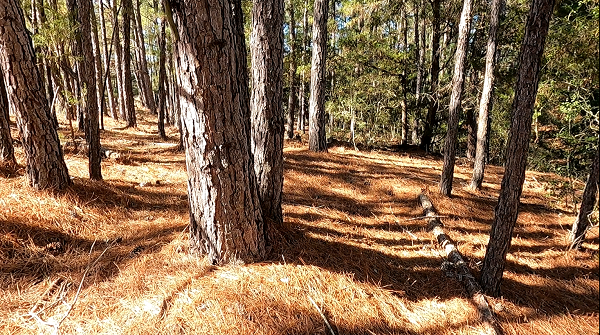
There is a forgotten industry in the sweat of the southern sun, one that once made the Gulf Coast hum with economic life and kept wooden ships from sinking into the brine. It is the story of pine pitch, a substance as humble as tree sap and as vital as any modern polymer.
Long before synthetic sealants filled hardware store shelves, the sticky, fragrant resin of longleaf and slash pines was the region’s liquid gold, waterproofing hulls and preserving rigs. That history lives on in the hands of modern outdoorsmen, survivalists, and craftsmen who have rediscovered this ancient adhesive, not for building schooners, but for mending the small fractures of life beyond the grid. The knowledge of transforming raw sap into a durable, waterproof glue represents a direct thread connecting a booming pre-Civil War economy to the practical needs of the present.
Key points:
- Pine pitch was the cornerstone of the Gulf Coast’s “naval stores” industry, a major economic driver before the Civil War, essential for building and maintaining wooden ships.
- The industry declined due to exhausted forests and new technologies, but the fundamental craft of making pitch glue persists as a practical, off-grid skill.
- Creating effective pine pitch glue is a delicate process of gentle heating, filtering, and mixing with binders like charcoal to reduce brittleness.
- The resulting adhesive is a versatile, heat-reactivated tool for field repairs, capable of sealing containers, hafting tools, and mending gear with a strength that rivals modern alternatives.
History of pine pitch in Gulf Coast boat building
To walk through a southern pine forest today is to tread on what was once an industrial landscape. For centuries, the coastal plains from the Carolinas to Florida were not just ecosystems but factories without walls, producing the critical materials that kept global navies and merchant fleets afloat. This was the world of “naval stores,” a term that sounds like warehouses but instead referred to the tar, pitch, and turpentine rendered from pine sap. The Gulf Coast, with its vast stands of resin-rich longleaf pine, was a production powerhouse. The economic heartbeat of entire communities synced with the rhythm of tapping trees and feeding slow-burning pits. Pine pitch was not a niche product; it was a primary commodity, as crucial to maritime life as sailcloth or timber.
The process was as visceral as the product was vital. One common method, known as the tar kiln, involved stacking resin-saturated “lightwood” heartwood into a conical pit, covering it with earth, and setting it to smolder. Over days, the slow burn would coax the resin out of the wood, where it would drip down and collect as a black liquid in a central barrel.
This was tar. To make the thicker, more refined pitch, this tar was then boiled in large kettles until it reached the perfect viscous consistency for caulking the seams between a ship’s planks. Applied hot, it would cool into a waterproof seal that flexed with the motion of the sea. Sailors also slathered it on ropes and canvas, the pitch’s antiseptic properties fighting off the rot induced by constant salt spray. The smell of a working ship, therefore, was not just salt and sea, but the sharp, cleansing scent of the pine forest, a literal piece of the southern coastline sailing to every corner of the known world.
This industry shaped lives and landscapes until it didn’t. The Civil War delivered a profound shock, but the decline had deeper roots. The very abundance that fueled the boom became its limitation, as the most accessible pine stands were gradually exhausted. The invention of kerosene provided a cheaper alternative to turpentine-based illuminants, and iron-hulled steamships began to eclipse wooden vessels. The great piney woods fell quiet, their economic purpose shifting to lumber and pulp. The knowledge, however, never completely vanished. It retreated from the industrial scale to the human one, preserved in the folk practices of rural communities and the curiosity of traditional craftsmen. The pitch that once sealed mighty hulls found new life as a component in polishes and varnishes, and more personally, as the base for a formidable field adhesive.
Making pine pitch glue for field repairs
The transition from historical sealant to personal repair kit is a journey of refinement. Where naval stores production was about volume, making pitch glue is about precision, a careful alchemy that turns brittle resin into a tough, reliable bond.
It begins with a walk in the woods, searching for the amber tears of a pine tree—the hardened sap that bleeds from a wound. This resin, collected without harming the tree, is the raw material. The first lesson is one of patience and respect for heat. As the knowledge base warns, pine pitch becomes very brittle when burned. The modern practitioner learns what the old tar boilers knew: this transformation requires a gentle touch. Melting the collected sap over a low, indirect heat allows it to liquefy without scorching, its fragrance releasing like a memory of the forest.
Once melted, the resin is strained through cloth to remove bark and debris, yielding a clean, golden liquid. But pure pitch is like glass; it holds fast but shatters under stress. This is where the ancient recipe proves its genius. To give the glue toughness and flexibility, binders are introduced.
Finely ground charcoal, added in a ratio roughly equal to the volume of pitch, is the most critical. It reduces the brittleness, giving the glue a dark, earthy body. For additional strength, fibrous materials like cattail fluff, crushed dry grass, or even fine herbivore dung can be mixed in. These fibers act like the rebar in concrete, creating a composite material that can handle tension and impact. The mixture is stirred over that persistent low heat until it achieves a consistency like thick molasses.
Then comes the clever part: storage. The glue can be poured into a tin to cool, but the classic method is to create a “pitch stick.” By winding the warm, pliable glue around a stick in layers, much like spinning cotton candy, one creates a portable, storable form. Once dried, this stick becomes a solid, shelf-stable tool.
When a repair is needed—a cracked tool handle, a leaking seam in a water bottle, a loose arrowhead—the user simply heats the end of the stick over a flame until it softens, then applies it directly to the repair. It is hot-melt adhesive in its most primal and elegant form, ready to be reactivated an infinite number of times.
- Gathering: Collect hardened, amber-colored pine resin from the bark of trees, prioritizing already-damaged areas or fallen wood to avoid harming healthy pines.
- Melting: Break resin into small chunks and melt in a metal container using very low, indirect heat (from coals or a rock beside a fire) to prevent burning and brittleness.
- Filtering: Pour the liquefied pitch through a cloth or fine mesh to remove dirt, bark, and insects, creating a clean base.
- Mixing: While the pitch is warm, incorporate binders. Start with a one-to-one ratio of finely powdered charcoal to pitch, then add fibrous material like dried grass or plant fluff for tensile strength.
- Storing: Use the warm mixture by either pouring it into a tin or, for optimal portability, winding it onto a stick in layers to create a solid, reusable “pitch stick.”
This process is more than a survival hack; it is a reclamation of agency. In a world of disposable goods and single-use plastics, the ability to mend a critical item with materials gathered from the immediate environment is a powerful skill. It connects the user to the same resource chain that once supported entire coastal economies, scaling an industrial process down to the palm of the hand. The pitch glue that fixes a hiking staff or a fishing trap is a direct descendant of the pitch that sealed the hulls of schooners, a testament to the enduring utility of natural materials when understood and prepared with care. It is a quiet, sticky thread of continuity, proving that the old ways can still hold things together in a fragmented world.
Sources include:
SRS.FS.USDA.gov [PDF]
Submit a correction >>
Tagged Under:
adhesive making, boatbuilding, DIY, field repairs, green living, Gulf Coast history, historical industry, historical trade, homesteading, material culture, natural adhesive, naval stores, Off Grid living, outdoor skills, pine pitch, pine resin, preparedness, prepper, prepping, resourcefulness, survival, survival skills, tar production, tips, traditional crafts, waterproofing, woodworking
This article may contain statements that reflect the opinion of the author
RECENT NEWS & ARTICLES