Sourdough Fermentation May Affect Digestion, Blood Sugar, and Gut Health, Research Indicates
10/26/2026 / By Coco Somers

Sourdough bread is made with a living starter of wild yeast and bacteria and fermented over hours or longer, according to a report published by The Epoch Times on Oct. 23, 2026. Research reviews cited in that report suggest the fermentation process can change grain compounds in ways that may affect digestion, mineral availability, blood sugar response, and gut activity. The reported effects vary widely by flour type, fermentation time, temperature, hydration, acidity, starter amount, and the specific yeasts and bacteria involved.
Experts interviewed by The Epoch Times said sourdough should not be assumed to be uniform in its health effects or to be gluten-free. The Epoch Times report emphasized that outcomes depend on how that process is carried out and on the finished bread.
The Epoch Times report is the primary source for this article, supplemented by published research and interviews. The findings do not support blanket claims that all sourdough products deliver the same benefits, and several of the studies reviewed carry caveats about certainty and study design.
Fermentation Process and Mineral Availability
According to the report, phytic acid in grains binds iron, zinc, and calcium and can reduce mineral absorption. Fermentation activates phytase and other enzymes that can break down phytate, potentially increasing mineral availability. A 59-gram slice of sourdough contains about 32 percent of the daily value for selenium and folate, 21 percent for thiamine, 20 percent for niacin, and 13 percent for iron, according to the report; nutrient content varies by recipe and flour.
Cameron Martino, who has a doctorate in bioengineering, told The Epoch Times that fermentation does not add minerals but changes the grain so existing minerals may become more available. James Gaffney, a microbiologist, told the newspaper that sourdough fermentation breaks down considerably more phytic acid than yeast fermentation does. In the wheat-fraction study, researchers reported that in their model 80 percent of phytic acid was eliminated by a pre-fermentation step [1].
The report stated that longer fermentation does not necessarily produce greater phytate breakdown in every loaf and that whole-grain flours generally provide more minerals than refined flours. The wheat-fraction research also found that the effect of fermentation on calcium bioavailability was stronger in whole-wheat flour than in bran, a difference researchers linked partly to lesser acidification or lower phytic acid degradation [1].
Digestive and Gut Health Findings
A 2024 review published in Foods found that fermentation can reduce FODMAPs, including fructans, and improve protein digestibility, according to the report. Mayo Clinic’s community health publication states that sourdough fermentation decreases the amount of gluten and FODMAP carbohydrates in the bread, which it says makes digestion easier [2]. The Epoch Times report also cited a 2023 systematic review that found sourdough may improve gastrointestinal comfort for some people, though differences in methods made effects difficult to isolate.
In a 2019 study including 36 healthy adults, sourdough breads scored higher than baker’s-yeast bread on several digestibility measures and were associated with faster stomach emptying and intestinal transit, the report stated. Martino told The Epoch Times that fermentation can partially break down wheat proteins, including gluten, but that the extent of FODMAP reduction varies and sourdough should not automatically be assumed to be low FODMAP. A 2021 review published in Microorganisms found that certain prebiotic compounds produced during fermentation may support beneficial gut bacteria, according to the report.
The report stated that live microbes in sourdough generally do not survive baking, so sourdough bread should not be considered a probiotic food solely because it is fermented. A separate 2021 laboratory gut model found that sourdough bread increased production of short-chain fatty acids, but the report stated that human clinical trials are needed to confirm effects in the gut. Research on butyric acid, a short-chain fatty acid produced when gut bacteria ferment dietary fiber, has linked it to anti-inflammatory effects in laboratory and clinical studies [3].
Blood Sugar and Cholesterol Research
The report stated that some studies found sourdough bread produced a smaller rise in blood glucose after a meal compared with bread made with baker’s yeast. Possible mechanisms cited in the report include increased resistant starch, reduced rapidly digestible starch, and organic acids such as lactic and acetic acid that may slow starch digestion or stomach emptying. A 2021 review published in Microorganisms reported that sourdough fermentation slows digestion and eventually reduces the speed of sugar entering the bloodstream [4]. Research in Food Chemistry found that long-time baked breads contained higher levels of resistant starch than reference breads, with greater starch hydrolysis resistance at measured intervals [5].
A 2022 systematic review and meta-analysis found that some sourdough breads modestly reduced post-meal blood glucose, but researchers rated the evidence as low to very low certainty, according to the report. Another review concluded there is not enough evidence to show a consistent advantage for sourdough over yeast-leavened bread, the report stated. Martino told The Epoch Times that lower post-meal glucose responses in some studies should not be interpreted to mean every sourdough bread has a low glycemic response.
The report cited one randomized controlled trial in which whole-wheat sourdough significantly reduced total and LDL cholesterol compared with white wheat yeast bread, while noting more research is needed to determine whether fermentation itself causes the effect. An article in Health magazine similarly states that sourdough’s fermentation process may make it gentler on the gut and that slower digestion may lead to steadier blood sugar levels compared with white bread [6].
Selection, Storage, and Safety Considerations
The report advised choosing well-fermented and whole-grain sourdough to potentially improve mineral availability, while noting that time, temperature, flour type, and microorganisms all affect fermentation. An article on ScienceInsights.org stated that a genuinely long-fermented sourdough contains flour, water, salt, and starter, and that a label listing commercial yeast, vinegar, or “sourdough flavor” suggests the bread likely skipped the extended fermentation associated with nutritional and digestive benefits [7].
For storage, the report stated that sourdough can be kept at room temperature in a bread box, paper bag, or kitchen towel for the first few days, sealed for longer room-temperature storage, and frozen for up to three months. It stated that refrigerating bread can accelerate staling and that baked bread should cool completely before storage. Sienna Walters, head baker at Leaven Foods, told The Epoch Times that a slowly fermented sourdough stays good on the counter longer than bread made quickly with commercial yeast.
The report stated that sourdough made with wheat or rye contains gluten and is not safe for people with celiac disease or wheat allergy, and that sodium levels vary by recipe and brand. It stated that mold on a loaf means the entire loaf should be discarded and that the word sourdough is not regulated in the United States, so ingredient lists should be checked. Mayo Clinic’s publication likewise notes that sourdough is still not safe for people with celiac disease [8].
References
- Sourdough fermentation of wheat fractions rich in ?bres before their use in processed food. dvips 5.83 Copyright 1998 Radical Eye Software. Journal of the Science of Food and Agriculture J Sci Food Agric 87:1368–1373 2007
- Sourdough bread: Get familiar with this fermented food. https://communityhealth.mayoclinic.org/featured-stories/sourdough-bread-benefits
- Research Examines Butyric Acids Role in Gut Health and Inflammation – NaturalNews.com, April 19, 2026.
- Sourdough Microbiome Comparison and Benefits – PMC – NIH. https://pmc.ncbi.nlm.nih.gov/articles/PMC8306212/
- Resistant starch formation in bread as influenced by choice of ingredients or baking conditions. Acrobat 3.0 Capture Plug-in. Food Chemistry Vol. 56 No. 4 pp. 389-394 1996
- What Happens to Your Body When You Eat Sourdough Bread Regularly? – Health. https://www.health.com/what-happens-when-you-eat-sourdough-bread-11998271
- What Is Long Fermented Sourdough and Its Health Benefits. https://scienceinsights.org/what-is-long-fermented-sourdough-and-its-health-benefits/
- The Surprising Benefits of Eating Sourdough – Martha Stewart. https://www.marthastewart.com/what-happens-when-you-eat-sourdough-11991147
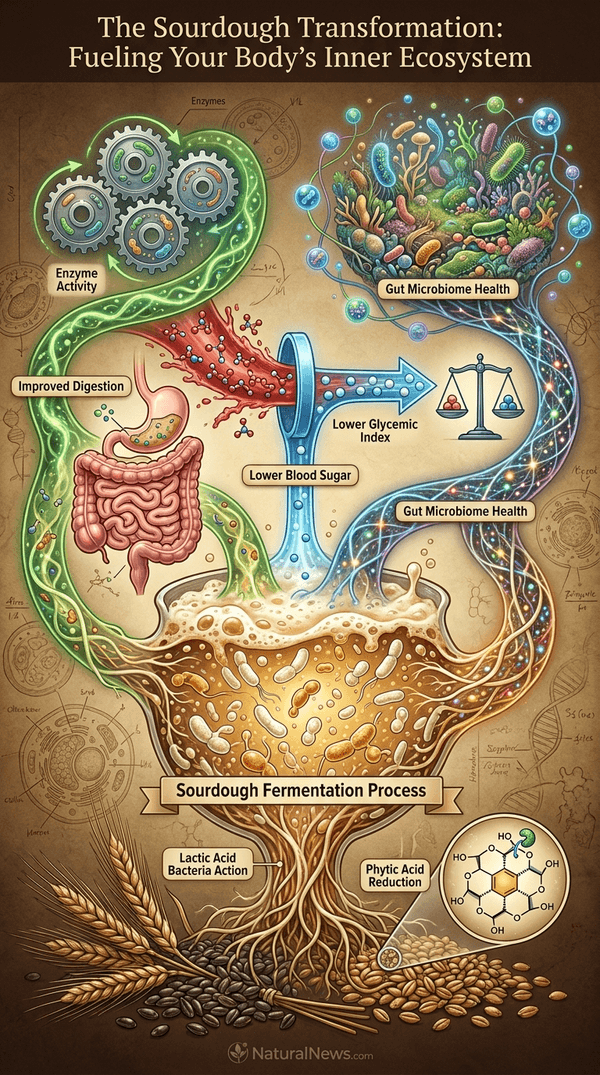
Explainer Infographic
Submit a correction >>
Tagged Under:
digestion, fermented foods, food cures, food is medicine, food science, functional foods, gut health, health science, natural health, nutrients, nutrition, organics, postbiotics, probiotics
This article may contain statements that reflect the opinion of the author
RECENT NEWS & ARTICLES